
Tapping into Neurodivergent Talent
Neurodivergent talent isn’t just “included”—it’s often the engine driving an organization’s next great leap.
Are you identifying and unlocking all the potential from your employees—or is game-changing talent still flying under the radar?

Hispanic Heritage Month: Bringing Your Whole Self to the Room Where High Performance Is Everything
What does it mean to bring your whole identity into a room where performance is everything?
For me, it means bringing my perspective as a Latina woman into my work as a psychologist and coach working with high-performing professionals in Legal and Finance.
I’ve had the privilege of coaching people who are exceptionally accomplished—leaders navigating demanding careers, high-stakes decisions, complex organizations, and the constant pressure to perform.

More Feedback Than Most Professionals Get in Five Years
One habit changes this: keeping a simple, private record of feedback received. What was said, when, by whom, in what context. Nothing elaborate; a running document is enough.
Two things happen when someone does this consistently.

Technical Skills Get You Hired. Self-Management Determines How Far You Go.
Every incoming class arrives with the same baseline: intelligence, work ethic, technical knowledge. That's what the recruiting process is built to identify, and it does that job well.
It's rarely what separates them a year later.
What we see separating people isn't found on a résumé:

Preparing Today's Talent for High-Performance Professions
The people entering demanding professions today are not the same cohort we were preparing five years ago. And the way we prepare them can't be either.
Regardless of your industry, whether you’re in investment banking, law, medicine, or consulting, the technical rigor hasn't changed. What's changed is everything around it: the pace of feedback, the visibility of performance, the ambiguity, the pressure to be proficient before you've had a chance to become proficient.
What we've learned working alongside HR and business leaders is that the gap isn't technical. Incoming classes arrive well-trained. Where they struggle is in the space between capability and sustained performance, and that space is built from a different set of skills entirely:

Building the Scaffolding They Never Got Part 3
If you’ve been following our latest posts, you know that organizations are facing a real issue:
A generation denied its developmental scaffolding is now inside your organization, building in real time, whether you're ready for that or not.
So how can you properly engage and support this generation of talent to best unlock their potential and set them up for success?

What the Scaffolding Generation Actually Experienced Part 2
There's a concept in developmental psychology called a critical period, a time window
during which certain skills and capacities are most efficiently acquired.
For the cohort that was aged 17–25 during 2020–2022, that window was open during a pandemic.
Here's what that actually meant:

The Scaffolding Generation Part 1
Something is happening with early-career employees, and most organizations don’t see the writing on the wall. 72% of Gen Z report burnout symptoms. 48% are experiencing significant financial insecurity. 77% report anxiety about the future of the world, higher than any other generation.
The instinct is to call this a Gen Z problem. A motivation problem. A resilience problem.
It isn't.

Agency During Change
You can't control the change. You can control everything about how you meet it.
In high-growth environments where strategy shifts, leadership changes, and the firm you joined keeps becoming something bigger, the fear of being left behind is real, and very understandable.
That feeling is a signal. It means it's time to reclaim your agency.

Leading through Change
Growth doesn't feel the way we think it will.
We plan for the opportunity. We don't plan for the disorientation.
Even the most driven professionals — people who wanted the change — can find themselves feeling unsettled when it arrives. That's not weakness. That's neuroscience.
The Psychology of Change
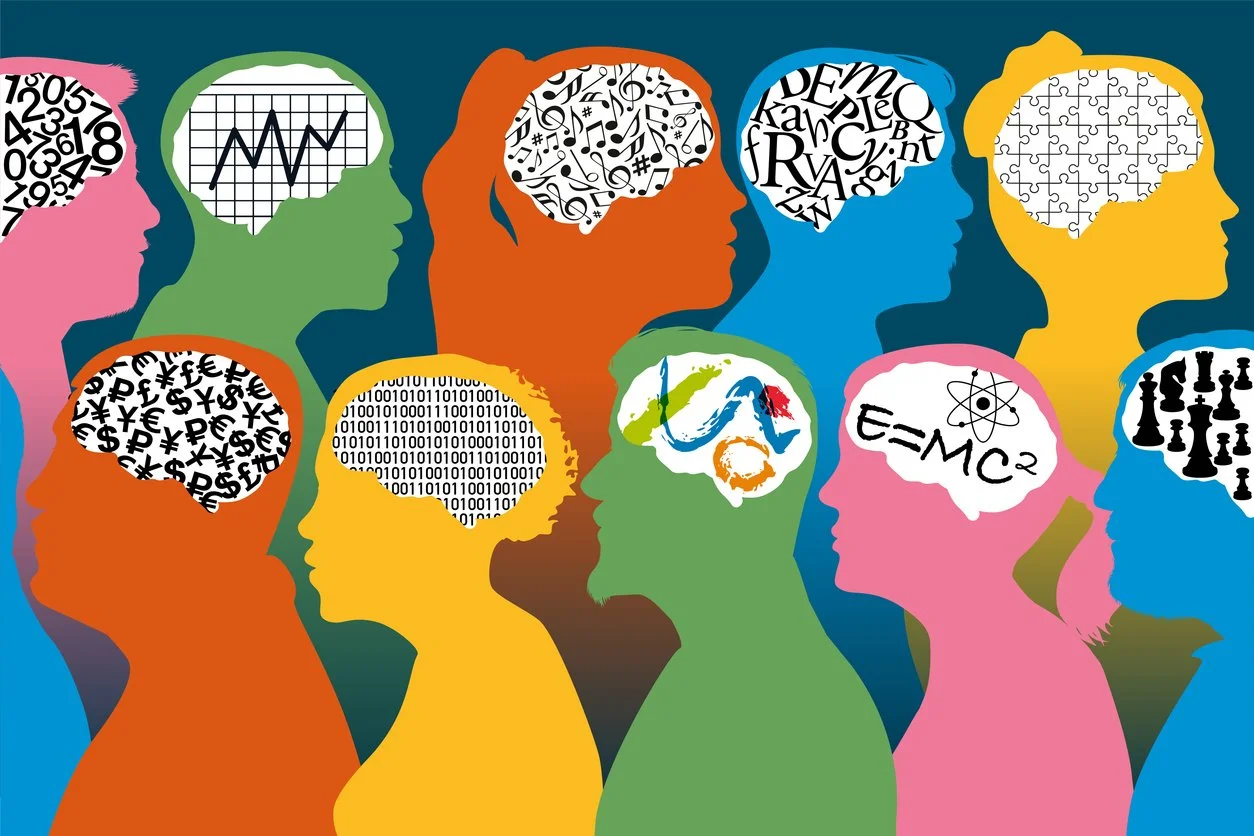
Growth doesn't feel the way we think it will.
We plan for the opportunity. We don't plan for the disorientation.
Even the most driven professionals — people who wanted the change — can find themselves feeling unsettled when it arrives. That's not weakness. That's neuroscience.

Judgment Creates Separation — And It’s Costing Us at Work
In today’s hyperconnected world, we’re surrounded by opportunities to judge — from polarizing news headlines to curated social media feeds that reinforce “us vs. them” thinking. This growing culture of judgment doesn’t just stay online — it follows us into our workplaces.
And the cost is real.

Juneteenth: Reflection and Responsibility in the Workplace
Like many, I didn’t fully understand Juneteenth until recently. I knew it marked the end of slavery, but I hadn’t grasped the deeper complexities — especially as a white American working in corporate spaces.

Same Burnout, Different Decade: From Hustle to Healing in the Modern Workplace:
Whether you were around in 1979 when Michael Jackson released, “Workin’ Day and Night” or paid top dollar for Beyonce’s Renaissance tour and heard, “Break My Soul”

Career Transitions: It’s more common than you think
Being laid off, cut, or deemed redundant, hits hard.

Into the Fast Lane: What New Analysts and Associates in Law and Finance Need to Know.
As a new class of analysts and associates step into the demanding yet exhilarating worlds of law and finance,
Leadership in Divisive Times: Supporting LGBTQ+ Colleagues with Integrity and Care
Pride Month 2025 arrives in a moment of heightened political, social, and cultural tension. For many LGBTQ+ professionals, the celebration of identity sits alongside concerns about new legislation, public discourse, and shifting societal attitudes.